Arroz Con Gandules
The official dish of Puerto Rico, Arroz Con Gandules or Rice with Pigeon Peas is often served with roast pork during the holiday season. The dish brings together ingredients and traditions from the native Taino people, Spanish and West Africans. Our version originates from a San Juan local and can easily be made without pork when times are lean or vegetarians/vegans are part of the gathering.
Sofrito is the base for many Puerto Rican dishes. Onion and garlic are common across many cultures, but Puerto Rican Sofrito depends on local peppers as well - such as Aji Dulce. These small sweet peppers are often unavailable in other parts of the world, so Cubanelles or other thin-skinned, thin-fleshed peppers can be used. Sweet red peppers are another good option, but stay away from spicy chiles that look similar such as habaneros or scotch bonnets. Recao or Culantro can also be difficult to find and is a critical part of Puerto Rican Sofrito. Cilantro has a similar flavor but is not as potent. Use fresh cilantro over dried and powdered culantro. Puerto Rican Sofrito is available in a pureed and jarred form, but in our opinion fresh tastes better.

Achiote seeds are native to the island, and were used by the indigenous Taino people long before Arroz Con Gandules. They bring bright color and an earthy flavor when steeped in hot oil. Many people (Puerto Ricans included) use bottled achiote oil, or even more common the packets of Goyo Sazon which contains artificial food dyes like Red 40. It takes just a few minutes to make fresh achiote oil with substantially better flavor, aroma and without the neon or nuclear orange coloration from Red 40. A container of achiote seeds cost more upfront, but are cheaper in the long run.

Two very important steps we were taught by our Puerto Rican host in San Juan were thorough caramelization of the sofrito to build depth of flavor, and a light hand on the amound of ground cumin used. This dish does not use a fortified stock, so developing flavor through the sofrito is very important. Similarly, too much cumin will overwhelm the more delicate flavors. Take your time with cooking down the sofrito, and be sure to measure the cumin. Diced ham or pork is often added at this stage and is very traditional. We opt to leave it out and serve meats on the side so that vegetarians can partake. If you add meat, ensure to render the fat and target no more than 3-4 tablespoons of fat total including the achiote oil. Leaner cuts like ham steak will allow you to keep all the bright achiote oil for color. A big piece of grilled or roast pork on top of the Arroz Con Gandules more than makes up for missing a few pieces in the rice and pigegon peas.

The strained tomatoes can be fresh or canned. Since the canned versions are often concentrated, use twice the amount in the recipe if going fresh. We keep Pomi Passata in our cupboards, so opt to use this raw, uncooked strained puree. Steer clear of options flavored with things like basil intended for Italian red sauces. Again, after adding the tomatoes to the pot reduce and caramelize the natural sugar in the tomatoes to build flavor.

Gandules or Pigeon Peas were brought to Puerto Rico by West African slaves. They grow easily in Puerto Rico's soil and climate and are high in protein. Gandules are harvested in the months around the Christmas season which makes Arroz Con Gandules a popular dish during the holidays. We have never had the opportunity to cook with fresh or frozen Gandules, but please do if they are available in your market. For our recipe we use a single 15-oz can of Gandules, drained. People debate the flavor gained/lost by draining and rinsing the gandules. Some like the tinny/metallic taste and consider it essential. We do not.

An important ingredient that brings pops of salt and acidity to the dish is Alcaparrada - a blend of green olives, capers and sweet red pimientos in a savory brine. With Spanish roots, this condiment is used both within the dish and to garnish the final plating. Our Puerto Rican host shared that she prefers all capers for their size and shape relative to the rice and gandules. We agree, and use only capers here. Use a good flavorful olive oil when making the achiote oil if you take this route.

MSG has a bad reputation that is undeserved and brings an undeniable dimension of flavor to food. The major flavor enhancer within packets of Goya Sazon or Bouillion (a common addition by many to Arroz Con Gandules) is MSG. Our Puerto Rican host did not use MSG, but it is the savory and cravable element that takes a 10 dish to 11. This recipe is still wonderful without it, but that much better with it. Just know that fresh tomatoes contain glutamates identical to those in MSG. Choose your own adventure here.

There are a lot of different rice varieties that can be used in Arroz Con Gandules, but medium-grain types are typical. Short to medium grain rice was brought to Puerto Rico by the Spanish. Our Puerto Rican host did not call for a specific medium grain variety and suggested that we use what we have. Long grain rice can be used, but doesn't have the same texture or mouthfeel as shorter varieties. The grains of Arroz Con Gandules should be mostly separate in the final dish. This recipe uses standard enriched Goya medium grain rice. Many people wash the rice first to help ensure separate grains, but much more important is to use the proper ratio of water, not over mixing, and allowing the rice to rest at the end. It also helps to use sofrito that isn't pureed, and to both drain and rinse the gandules. Wait until the liquid in the pot has reduced to the point where the rice pokes above the surface before covering. You may need to experient with your stove, pot/lid and variety of rice to get things right.

It looks nice to serve Arroz Con Gandules in a plentiful mound - either for the whole table or each individual. Dress it up with some strips of roasted red pepper, pimiento, a few recao or cilantro leaves. Traditionally served with Pernil, a Puerto Rican roast pork it makes for a feast. In warmer months, grilled pinchos over charcoal with Arroz Con Gandules is fantastic. Serve with a bottle of Puerto Rican Pique and add a few splashes to bring fiery heat.
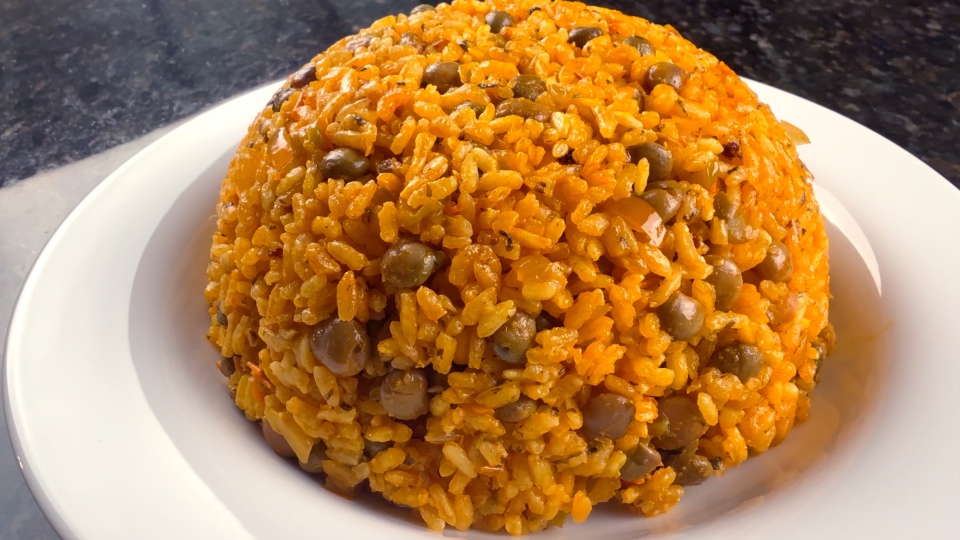
Arroz Con Gandules
Serves 6 as a main or 12 as a side
Ingredients:
- 1 Medium Yellow Onion
- 2-3 Cubanelle and Aji Dulce Peppers
- 4-6 Cloves Garlic
- Small Bunch Culantro or Cilantro
- 1/4 Cup Olive Oil
- 2 Tablespoons Achiote Seeds
- 1/4 Teaspoon Ground Cumin
- 1 Bay Leaf
- 1/4 Cup Strained Tomatoes
- 15oz Can of Gandules, Drained
- 1/3 Cup Brined Olives, Capers or Alcaparrado Mix, Drained
- 4 Cups Water
- 2 Teaspoons Morton Kosher Salt, Or To Taste
- 1/2 Teaspoon MSG
- 3 Cups Medium Grain Rice
Instructions:
- Dice the yellow onion and peppers. Mince the garlic and cilantro. This is the sofrito.
- Heat the oil and achiote seeds over medium-high heat until sizzling. Turn off the heat and cool for 5-10 minutes. Strain the seeds.
- Add the achiote oil to an 8-quart dutch oven over medium-high heat along with the prepared sofrito. Saute until caramelized. Add the cumin and bay leaf and saute an additional 2 minutes. Add the tomatoes and reduce until caramelization begins to form on the pot bottom.
- Add the gandules, capers, water, salt and MSG. Bring to a light boil scraping the fond from the bottom of the pan, then add the rice. Bring back to a boil over medium-high heat stirring occassionally to ensure no sticking occurs.
- Once the liquid is reduced so that the rice begins to appear above the surface, reduce the heat to low, cover the pot with a tight-fitting lid and cook for 25 minutes without lifting the lid.
- After 25 minutes shut the heat off, fluff the rice with a fork being careful not to over-stir, return the lid and let rest 15 minutes.
- Fluff the rice again and serve. Use a small/thin sharp spatula to bring up the crispy pegao on the bottom of the pot and serve on the side.

Those in the know go for the Pegao - a Puerto Rican equivalent to Spanish Socarrat or Persion Tahdig. Cooked properly, a layer of rice will stick to the bottom of the pot and fry becoming crispy/crunchy and concentrated in flavor. Use a very thin short handled spatula with a sharp edge to bring up the Pegao in large pieces - no scraping with a fork or spoon. Leave a bit of soft rice on top so that when the Pegao is folded over there are layers of texture to be enjoyed. This angle of the dish has it's own strategy to secure the limited quantities of Pegao available. Please enjoy!



What makes something memorable and worth revisiting? What should be avoided, accepted or pursued? Is there a better or best version? What is good?
Grab some popcorn and join the circus as we answer these questions through shared experience. We look forward to having you with us along the way!
Copyright © 2024 - 2026 Purpose Circus