Japanese Teriyaki Chicken
Teri means luster, gloss or shine and Yaki means grilled, broiled or pan-fried. The cooking style originated in Japan and has spread worldwide with significant modification in Hawaii and the Pacific Northwest. Originally charcoal grilled fish brushed with a salty sweet glaze, chicken thighs are also popular. The traditional Japanese approach is very simple and lacks ingredients such as garlic and ginger. The focus is on properly browned chicken and a simple but flavorful sauce thickened through reduction rather than by starches. We learned these techniques from a Japanese woman in her beautiful suburban Tokyo home. Serve Japanese Teriyaki on its own with a side of rice, miso soup and pickles with fresh fruit for dessert. Itadakimasu!
Our Japanese Host explained to us that Chicken Teriyaki is almost always made with skin-on boneless chicken thighs. The chicken is cooked skin side down in a pan to render the fat and crisp the skin, then flipped once to finish. The sauce can either be made in the pan with the chicken or after the chicken has been removed to preserve it's crispiness.

In Japan chicken thighs can be purchased as a skin-on boneless leg quarter including the boned drum stick. In the US this is not common as skin-on leg quarters or thighs are generally bone-in. Take your time to carve out the bones while preserving the skin and meat. Bones can be frozen and used for stock.

Once boned, make cuts in the chicken meat roughly one fourth inch apart in each direction. This will help seasoning to penetrate, break up tendons and help to prevent the meat from swelling or curling during cooking. Our Japanese host also poked the skin 20-30 times on each thigh with a cocktail skewer, but at home we tried this multiple times in side by side comparison with no holes and found zero difference in rendered fat or crispiness.

You can either use non-stick or stainless, and there are pros/cons to both. Non-stick will yield the best skin crispiness but you won't develop a fond on the pan which makes makes the sauce extra tasty. With stainless you need a sharp edged turner to bring up the edges of the chicken. With either pan type start cold and apply pressure to the chicken to ensure uniform skin contact with the pan. This will guarantee a perfect crust.

Don't flip or move the chicken until it is 80% cooked through. If using a stainless pan you may need to use a thin sharp spatula to bring up the edges of the chicken which may be bonded to the pan fond. There should be no skin or meat stuck to the pan.

After degreasing, our Japanese host and many Japanese home cooks make the sauce in the pan with the chicken. This can soften the skin, but traditional Japanese Teriyaki does not try to preserve the skin crisp. The sauce can be reduced and spooned over the chicken. Alternatively, remove the chicken and rest skin-side up. Degrease leaving the fond and add the sauce ingredients first deglazing with the sake.

Traditional Japanese Teriyaki does not use starch to thicken the sauce. In fact, the sauce is a glaze and not a sauce at all. Modern takes even in Japan are more sauce like and sometimes starch is used to cheat the reduction process to save time at the expense of texture and flavor. Sugar is what gives viscosity to the traditional glaze, and care must be taken to use the right ratio of sugar to soy sauce for balanced flavor. The recipe presented here uses a traditional reduction with no starch, but slightly more sugar so that a modern sauce can be served. Teriyaki sauce should be dark but clear with a luster. Grease and vegetal juices from ingredients like ginger will cloud the sauce. Reduce by 1/3 to 1/2 to achieve the viscosity you prefer.

After resting the chicken, flip it skin side down on a dry surface and cut into strips. Immediately flip skin-side up to preserve the crispiness. If making the sauce in the pan with the chicken, you can slice the chicken skin side down without concern since the skin will be softened.

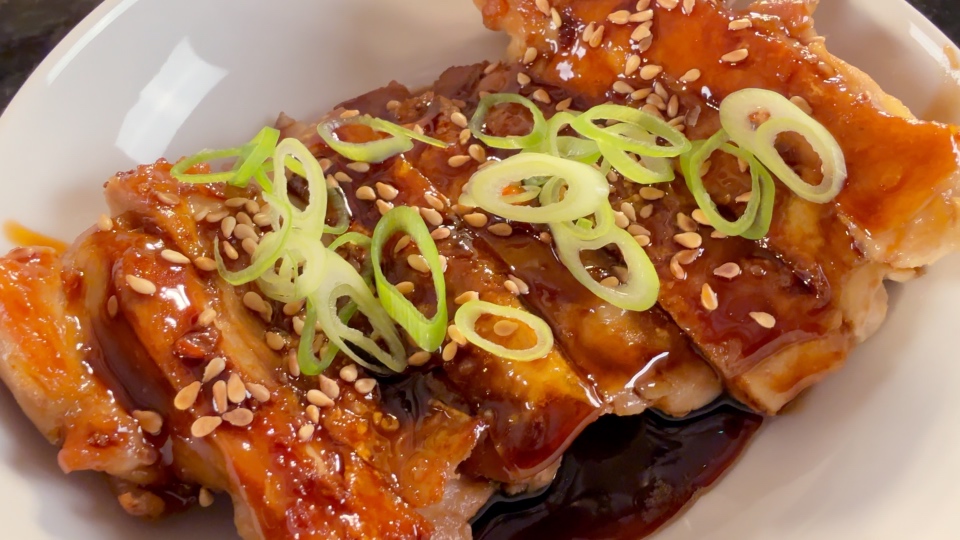
Spoon some sauce into a dish sized to the chicken, add the chicken skin-side up, then use a silcone brush to coat the chicken with the thickened sauce. Properly reduced, the sauce will have a lower moisture content and shouldn't cause the skin to significantly soften. Garnish with toasted seseame seeds and thinly sliced green onion.

Japanese Teriyaki is traditionally served in its own dish unlike versions from Hawaii or Seattle where it is typically served over or next to rice as a plate lunch. Eat the slices of chicken over a bowl of rice catching any drips. The sauce will make properly cooked Japanese medium grain rice even more delicious.

Japanese Teriyaki Chicken
Serves 3 with additional sides
Ingredients:
- 3 Skin-On Chicken Thighs
- Kosher Salt To Taste
- 1 Teaspoon Peanut Oil
- 1/2 Cup Sake
- 1/2 Cup Mirin
- 1/3 Cup Japanese Soy Sauce
- 1/4 Cup White Sugar
- 1 Tablespoon Toasted Sesame Seeds
- 1 Scallion, Thinly Sliced
Instructions:
- Debone the chicken while preserving the meat and skin. Place skin side down, and trim any skin or fat extending past the meat. Make slices 1/4 inch apart both direction into the meat passing through sinew and tendon but stopping short of the skin. Season the meat with Kosher salt.
- Add the oil to a cold pan along with the chicken skin side down. Place the pan over medium heat and slowly cook without moving the chicken. Press the meat down with a turner to ensure the cook is consistent. Reduce the heat to medium-low depending on the output of your particular stove.
- Once the chicken is fully cooked around the edges, about 80% complete, use a sharp turner to flip the chicken and finish cooking the other side. Remove the chicken to a folded towel skin side up to rest.
- Degrease the pan leaving the fond, and add the sake, mirin, soy sauce and sugar. Deglaze the fond, and reduce by 1/3 to 1/2 until the sauce forms a light syrup that coats the back of a spoon. It will thicken more as it cools slightly.
- Once rested, flip the chicken skin side down on a dry surface and slice. Immediately turn skin side up. Add 1-2 tablespoons of sauce to a small warmed dish, add the chicken skin side up, then brush with the Teriyaki sauce. Garnish with toasted sesame seeds and scallion.

Teriyaki is an easy dish to bring together, and while we focused on chicken here the techniques can be used for other proteins like beef, tofu or fish (traditional). It works best with fatty cuts like Chicken Thighs, Rib Eye and Yellowtail. The ratios of sake to mirin to soy sauce to sugar along with the amount of reduction can yield significant differences in flavor profile. Develop your own family recipe using the basics here. We hope you learned something as we did!


What makes something memorable and worth revisiting? What should be avoided, accepted or pursued? Is there a better or best version? What is good?
Grab some popcorn and join the circus as we answer these questions through shared experience. We look forward to having you with us along the way!
Copyright © 2024 - 2026 Purpose Circus